See inside complex components without destroying them.
How do you inspect internal channels, identify residual powder and examine hard-to-reach surfaces in additively manufactured parts, without cutting them open? Our industrial videoscope enables non-destructive visual inspection of internal features, using a micro-videoscope to access confined spaces and capture clear, actionable images your team can assess with confidence.
-
 Inspect hard-to-reach internal areas.
-
Ensure non-destructive inspection of critical components.
-
Capture and retain visual evidence with high-quality images and video.

Complex geometries. Hidden inspection challenges.
Additive manufacturing enables the production of complex, high-performance components with intricate internal channels, curved passages and complex cavities.
But how do you inspect these internal features once a part has been built, when direct access is no longer possible?
Trapped powder, partially obstructed channels and imperfections in internal surfaces can all make inspection more challenging and complicate the qualification of additively manufactured parts.
For quality and process engineering teams, the challenge is to inspect these hard-to-reach areas without damaging the part or introducing additional inspection steps.
Inspect inside complex parts without damaging them
An industrial videoscope (or video borescope) lets you see inside a component without having to take it apart or cut it open. Its slim probe and built-in optics provide access to internal areas that are difficult to inspect with the naked eye.
Simply insert the probe through an existing opening to examine accessible internal channels and cavities. The areas you can reach depend on the geometry of the part and the probe’s dimensions and capabilities.
Live images and video help you examine internal surfaces, identify potential powder residues and spot visible irregularities. You can also save your findings for further analysis and quality records.
A simpler way to inspect complex parts. Videoscope inspection helps your team carry out visual checks, share findings and document results, without destroying the component.
Key benefits:
- ✓ See inside hard-to-reach areas.
- ✓ Inspect without damaging the part.
- ✓ Capture images and video for clear, traceable records.
- ✓ Reduce the need for more invasive inspection methods.
The right videoscope for your inspection needs
Which industrial videoscope is best suited to your application?
Every component presents its own inspection challenges. When selecting the right probe, it is important to consider the diameter and depth of the passages, their curvature, and the condition of the internal surfaces.
In additively manufactured components, surface roughness and irregularities can make it more difficult for a probe to navigate narrow internal channels.
Our solutions support a range of inspection configurations. The most suitable probe will depend on the component’s geometry, the dimensions of the internal passages, and the areas that need to be inspected.
Where access allows, an ultra-small-diameter probe may be suitable. In other cases, a larger-diameter probe may be a better option, provided the passage is wide enough and its geometry allows the probe to pass through.
For extremely narrow access points and confined internal spaces.
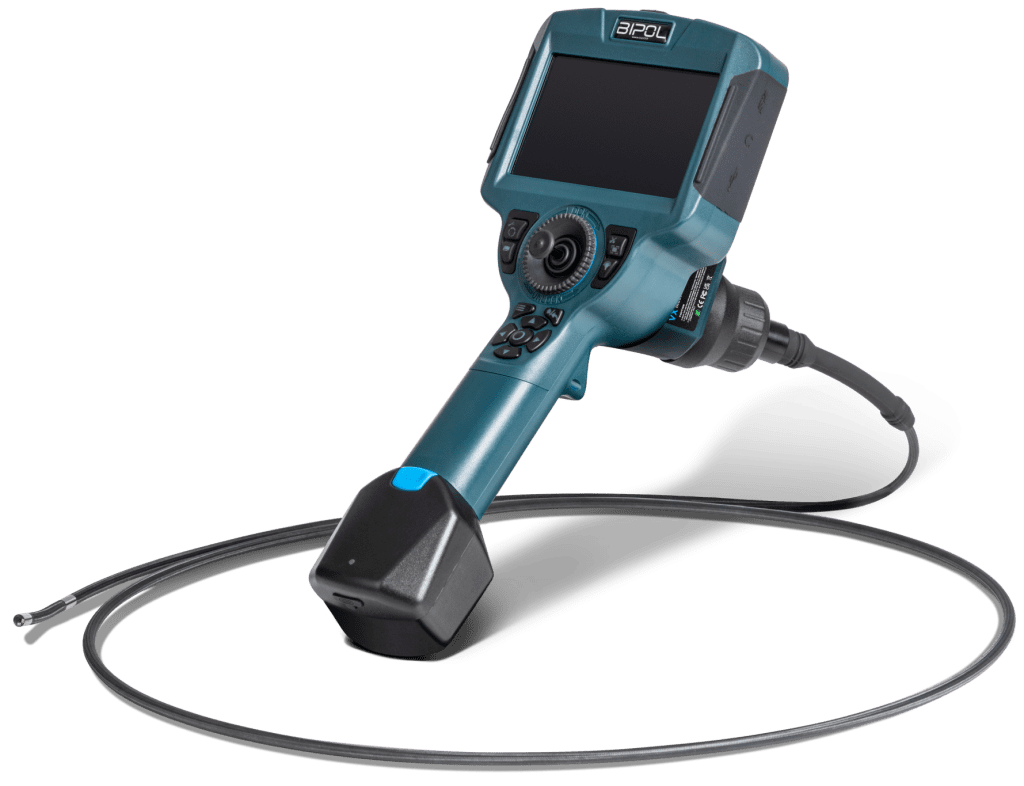
PRO GX+ videoscope
When every millimetre counts, probe diameter makes all the difference. Designed for inspecting miniature components and hard-to-reach internal features, our micro-diameter videoscope gives you access to spaces that are difficult or even impossible to inspect with conventional visual inspection methods. Reach the smallest components. Inspect with precision.
For inspecting larger internal channels.
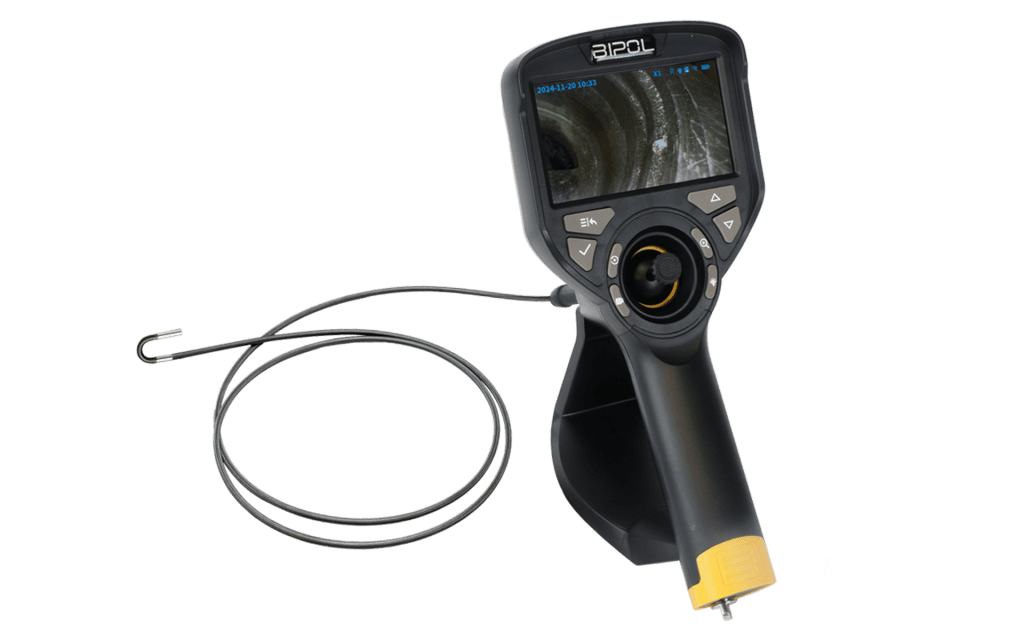
PRO S+ videoscope
The PROS+ videoscope makes it easier to inspect complex internal channels and hard-to-reach features without damaging the part. With interchangeable probes from 2.0 mm to 6.2 mm in diameter, it helps identify residual powder and visible surface irregularities across a wide range of component geometries.
Which areas of your additively manufactured parts can you inspect with a videoscope?
A videoscope enables visual inspection of accessible internal features in additively manufactured parts. It helps identify visible anomalies and provides a record of inspection findings.
Typical applications
✓ Internal channels and passageways
Inspect accessible internal passages to identify potential obstructions and visible irregularities.
✓ Residual powder after manufacturing
Examine accessible areas for powder residues remaining after manufacturing and post-processing.
✓ Internal surface condition
Examine accessible surfaces for irregularities, marks and other visible defects.
✓ Complex cavities and internal geometries
Inspect hard-to-reach cavities and internal features, provided the probe can be inserted and manoeuvred within the available space.
✓ In-process and production quality inspection
Capture images and video to document findings, support technical discussions and contribute to quality records.
Struggling to inspect hard-to-reach internal features?
Choosing the right industrial videoscope starts with understanding the part you need to inspect. Channel diameter, depth, bends and internal geometry all affect probe access and inspection capabilities.
Not sure which solution is right for your part? Let’s talk.
Our technical team can help you assess your inspection requirements, explore access limitations and determine whether videoscope inspection is the right fit for your application.
Talk to an expert

Why choose us as partner?
Our ISO 9001, ISO 14001 and ISO 45001 certifications are more than formal accreditations, they are proof of our commitment to delivering consistent quality, responsible environmental management and the highest safety standards.