In industrial environments where reliability and safety are paramount, early fault detection is a critical concern. Among non-destructive testing (NDT) methods, ultraviolet (UV) inspection stands out as a particularly effective solution for revealing defects that are invisible to the naked eye.
What Is Ultraviolet (UV) Light?
Ultraviolet (UV) light is part of the electromagnetic spectrum, with wavelengths ranging from 100 to 400 nanometres. In industrial inspection, UV-A (around 365 nm) is typically preferred, as it induces fluorescence without degrading or altering the material. Although not directly visible to the human eye, UV radiation has a key property: it can excite certain fluorescent substances.
Principle of UV Inspection: Fluorescence.
UV inspection is based on fluorescence. When a fluorescent substance is exposed to a UV source, it absorbs the energy and re-emits it as visible light. This phenomenon makes otherwise undetectable defects visible.
In the context of non-destructive testing (NDT), this technique commonly relies on:
- Fluorescent penetrants to reveal cracks.
- UV tracers to locate leaks (hydraulic systems, fuel, gas).
- Fluorescent agents for detecting surface contamination.
Industrial Applications
UV inspection is widely used across demanding industries:
- Structural defect detection
Identification of microcracks in metallic or composite components, particularly in aerospace, energy, and automotive sectors.
- Leak detection
Fluids containing fluorescent tracers become visible under UV light, enabling precise localisation—even in hard-to-access areas.
- Cleanliness control
Reveals organic or chemical residues that are invisible under white light, making it especially valuable in the pharmaceutical, food processing, and electronics industries.
Advantages of UV Inspection.
- High contrast: defects stand out clearly against their surrounding environment.
- High sensitivity: capable of detecting very small anomalies.
- Non-destructive method: no alteration or damage to inspected components.
- Fast execution: well-suited to production line constraints and in-line inspections.
- Adaptability: can be deployed in complex environments using compact, portable equipment.
Integration into Industrial Videoscopes.
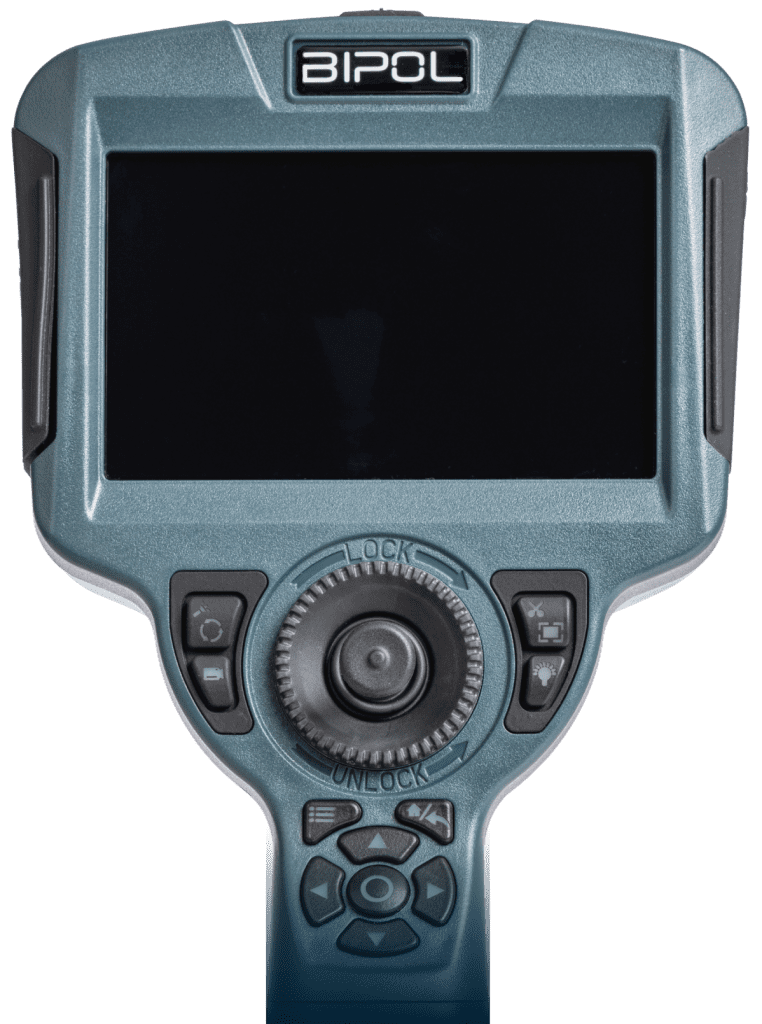
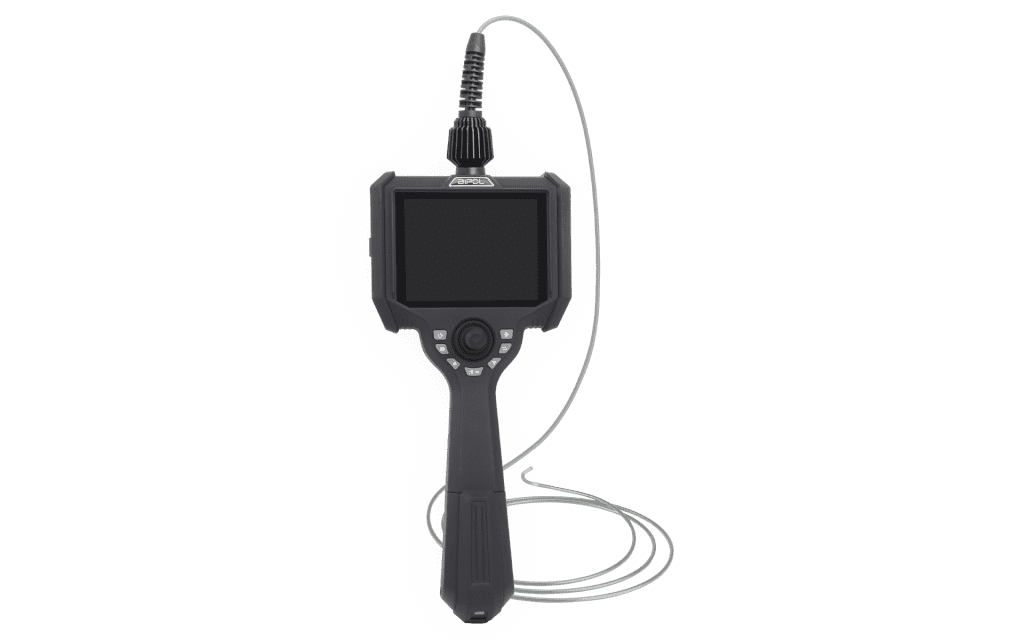
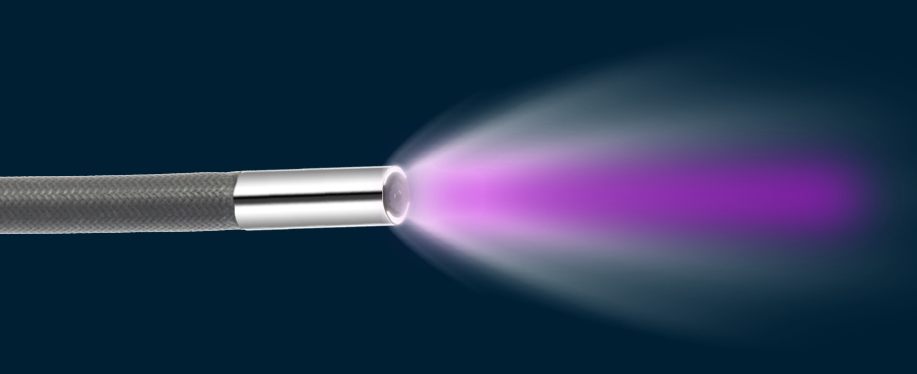
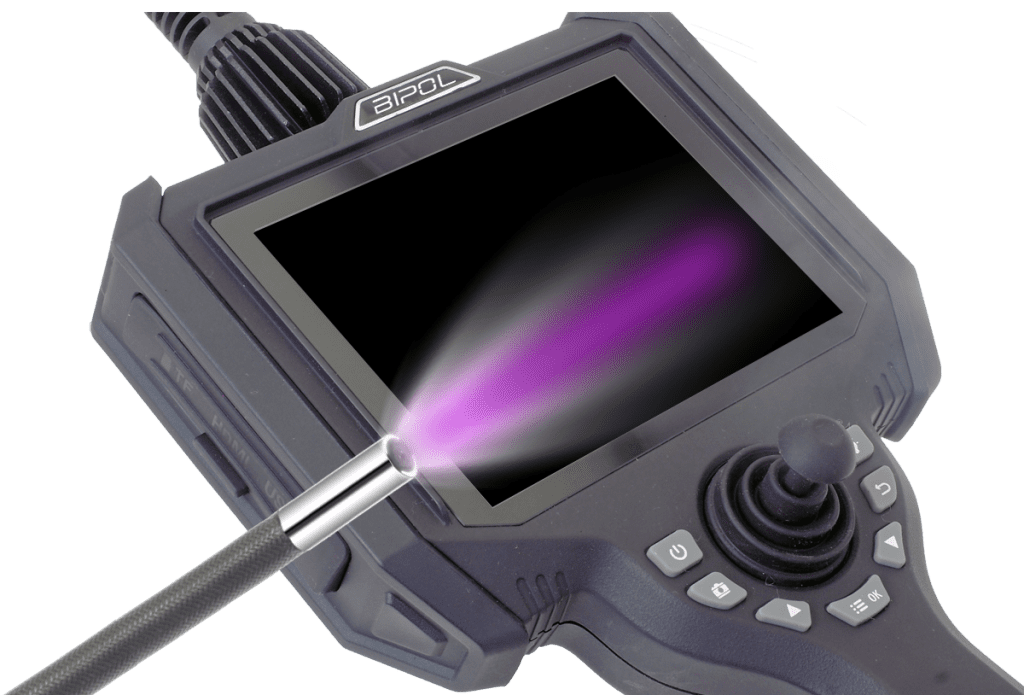
Advances in visual inspection have made it possible to integrate UV light directly into industrial videoscopes, providing an effective solution for inspecting confined or hard-to-reach areas. In this context, our range includes two dedicated models designed for fluorescence-based inspections using UV illumination.
PRO GX+: Precision and Performance
Available in 3.9mm and 6.2mm diameters, the PRO GX+ features dedicated UV illumination. It is particularly well-suited for NDT inspections, micro crack detection, and leak tracing in constrained environments. Its design ensures excellent visibility of fluorescence phenomena.
PRO B UV: Versatility and Efficiency
The PRO B UV features dual lighting:
- White light for standard inspection
- UV light for fluorescence-based detection
This dual functionality allows users to switch instantly from a general overview to targeted analysis, thereby optimising inspection efficiency while reducing manipulations.
Conclusion
UV light inspection has become an essential method in non-destructive testing. Through fluorescence, it reveals the invisible and enables a high level of precision in defect detection.
When combined with modern equipment such as videoscopes featuring integrated UV illumination, it provides a complete, reliable solution adapted to real-world operational constraints.
In summary, UV technology makes it possible to see what conventional inspection methods cannot reveal, raising the standard of industrial quality control.